

- The European Commission has officially registered the European Citizens’ Initiative “Rights for Nature: Empower Citizens to Represent and Protect Ecosystems” for signature collection
- Starting this autumn, one million Europeans will be invited to demand that the EU recognise ecosystems as legal entities with rights of their own
- The initiative is backed by a coalition from fourteen EU member states, with the ambition of running a coordinated campaign across all twenty-seven
- The initiative will be presented at a conference in the European Parliament on 2 July
On 19 May 2026, the European Commission confirmed that the European Citizens’ Initiative “Rights for Nature: Empower Citizens to Represent and Protect Ecosystems” meets the admissibility requirements of Regulation (EU) 2019/788 and has been formally registered. The initiative calls for an EU directive that would recognise ecosystems as legal entities with the right to exist, to regenerate, and to be defended in court, and empower ordinary citizens to act as their legal representatives. Signature collection is set to begin in autumn 2026.
“The Commission’s decision to register this initiative is a recognition that the idea is legally and politically serious. Now the real work begins.” – Emmanuel Schlichter, Rechte der Natur e.V., Germany
“For years, people across France have been defending their rivers and forests with everything they have. Today, Europe confirms: your demand is legitimate. Now we need a million voices to make it law.” – Marine Yzquierdo, Notre Affaire à Tous, France
“The Odra has been waiting. Poland has been waiting. This registration means that the conversation about rights for nature is now happening at the level where it needs to happen.” – Dobrosława Lewicka, Osoba Odra, Poland
“Mar Menor taught us that legal rights save ecosystems. Today, Europe opens the door to that lesson for every river, every wetland, every forest on this continent. With this campaign, we are bringing Mar Menor to the heart of Europe.” – Eduardo Salazar, ILP Mar Menor, Spain
The initiative will be presented to the public at a conference in the European Parliament on 2 July 2026, 15:30–19:00, bringing together civil society organisations, Members of the European Parliament, and campaigners from across the continent.
In its decision, the European Commission confirms that “based on Article 192(1) of the Treaty on the Functioning of the European Union (TFEU) in connection with Article 191(1) TFEU, it could adopt a proposal for a legal act to strengthen the protection of ecosystems, including the rights to exist, to regenerate their biocapacities and vital cycles, and to be restored. Such an act could also confer legal personality on ecosystems and grant citizens and communities standing to act on their behalf.”
Signature collection is planned to begin in autumn 2026 and will run for twelve months. To succeed, the initiative must gather at least one million signatures from signatories and meet thresholds in at least seven EU member states. If successful, the European Commission is obliged to examine the proposal and respond formally.
Citizens and organisations wishing to follow or support the campaign can sign up at rightsfornature.eu.
Notes for editors
What are Rights of Nature?
Rights of Nature is a legal concept that grants ecosystems legal personhood, recognising them as subjects with their own rights rather than as property. These rights typically include the right to exist, to regenerate, and to be restored. Crucially, they come with a mechanism for enforcement: citizens are empowered to represent ecosystems in legal proceedings, standing up for their interests in the way a guardian might act for a person unable to speak for themselves.
The concept has roots in indigenous traditions that recognise the living world as a subject of relationships and responsibilities, not merely a resource. It has gained increasing traction in international law and comparative constitutional scholarship over the past two decades.
A global movement
Around twenty countries have already recognised rights for ecosystems, through constitutions, legislation, or landmark court rulings. Ecuador enshrined Rights of Nature in its constitution in 2008. New Zealand granted the Whanganui river legal personhood in 2017, establishing a governance body of joint Māori and Crown representatives to act on the river’s behalf. In 2019, the UN programme Harmony with Nature described Earth Jurisprudence – the broader legal philosophy of which Rights of Nature is the practical expression – as “the fastest growing legal movement of the 21st century.”
Mar Menor: Europe’s landmark case
The Mar Menor is a saltwater lagoon on the south-east coast of Spain, the largest in Europe. Decades of agricultural runoff and urban development pushed it to the edge of ecological collapse: in 2019 and again in 2021, the lagoon suffered mass die-offs of fish and other marine life visible from the shore.
In response, a citizens’ campaign gathered over 600,000 signatures – at the time, the largest citizens’ legislative initiative in Spanish history. In 2022, Spain became the first European country to grant legal personality to an ecosystem, when the Mar Menor and its basin were recognised as a subject of rights by Act of Parliament. The Spanish Constitutional Court upheld this law in November 2024.
The law established a governance structure of three bodies: a Committee of Representatives drawn from local communities, users, and civil society; a Scientific Committee; and a Monitoring Commission. Together, these bodies form the legal “guardianship” of the lagoon. Since the law came into force, the lagoon has shown measurable signs of recovery.
The “Rights for Nature” initiative seeks to bring this model to EU level, enabling every European ecosystem to benefit from the same legal protection.
Other European examples
Across the continent, citizens are already taking action locally without waiting for lawmakers to act. In France, declarations of rights of ecosystems have been proclaimed for the Tavignanu , the Seine, the Durance, and other rivers, with projects to establish parliaments of rivers for the Loire and the Creuse rivers. In Poland, nearly 100,000 people signed a citizens’ initiative for the Odra river; on the same day the “Rights for Nature” ECI was submitted to the European Commission, the Polish Sejm voted to take the Odra rights bill onto its agenda. In Germany, a campaign for the rights of the Spree river has mobilised thousands. In Belgium, citizens are fighting for the Sambre.
About the initiative
“Rights for Nature: Empower Citizens to Represent and Protect Ecosystems” is a European Citizens’ Initiative coordinated by Rechte der Natur e.V. (Germany). It is part of a global Rights of Nature movement recognised in over twenty countries. rightsfornature.eu
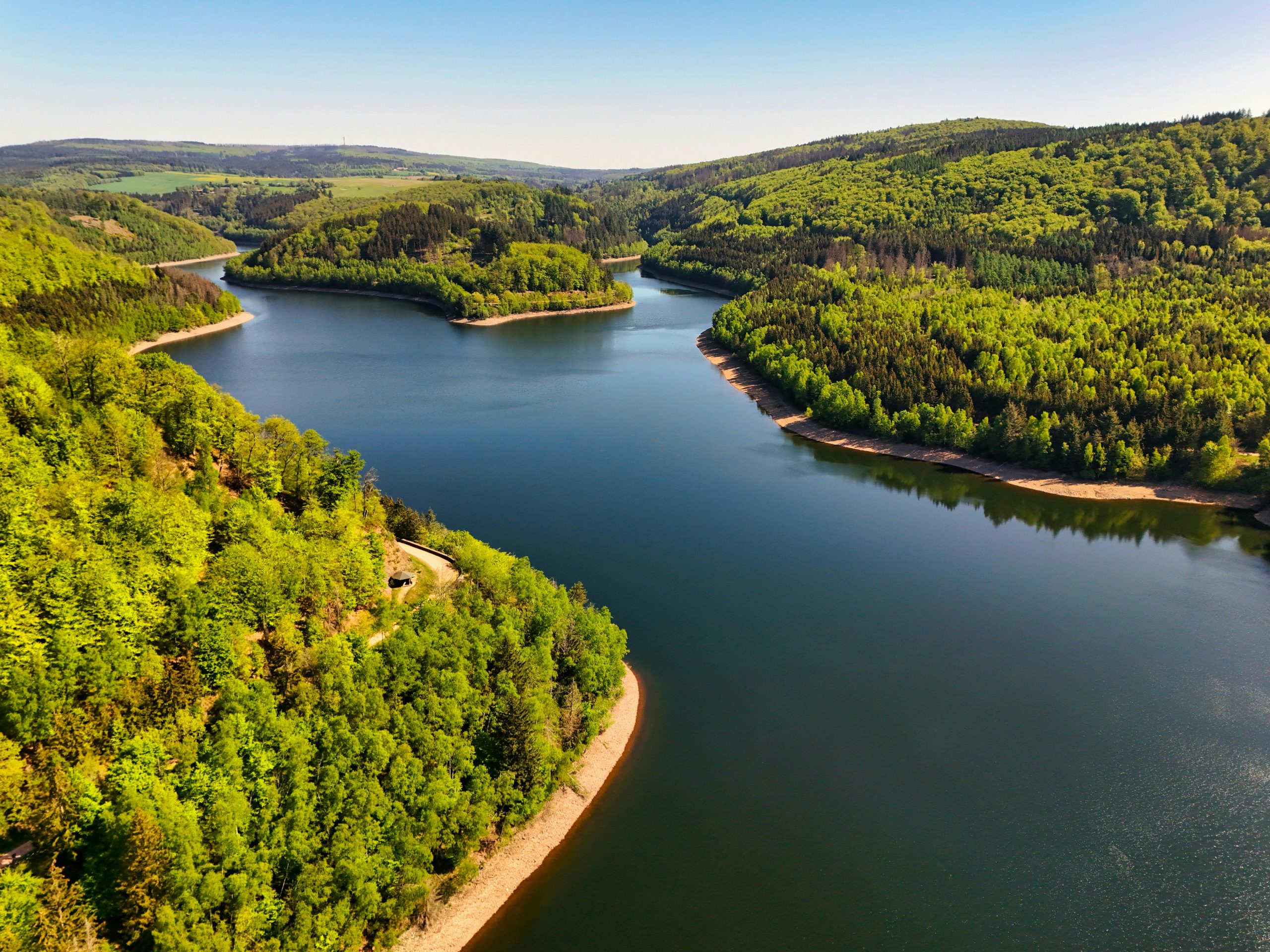
Cover image: Volker Braun / Pexels